Coffee beans contain an abundance of organic lipids, volatile aromatics, and soluble acids. While these components create the rich nuances in your morning cup, residual oils quickly oxidize on metal, glass, and burr surfaces. Over time, oxidized oils cause unpleasant astringency, muddy flavors, and persistent bitterness in even the most delicate specialty roasts.
1. The Chemistry of Coffee Residue and Rancid Oils
Freshly ground coffee deposits microscopic fines and oily films inside grinders, portafilters, and brew baskets. Within forty-eight hours, exposure to heat and oxygen turns these residues rancid. When fresh water washes through contaminated brewing pathways, it strips those stale compounds directly into your fresh brew.
Consistent cleaning is not merely aesthetic maintenance. It protects extraction geometry, water dispersion patterns, and temperature stability across every component of your brew station.
2. Daily Care Routine for Espresso Machines
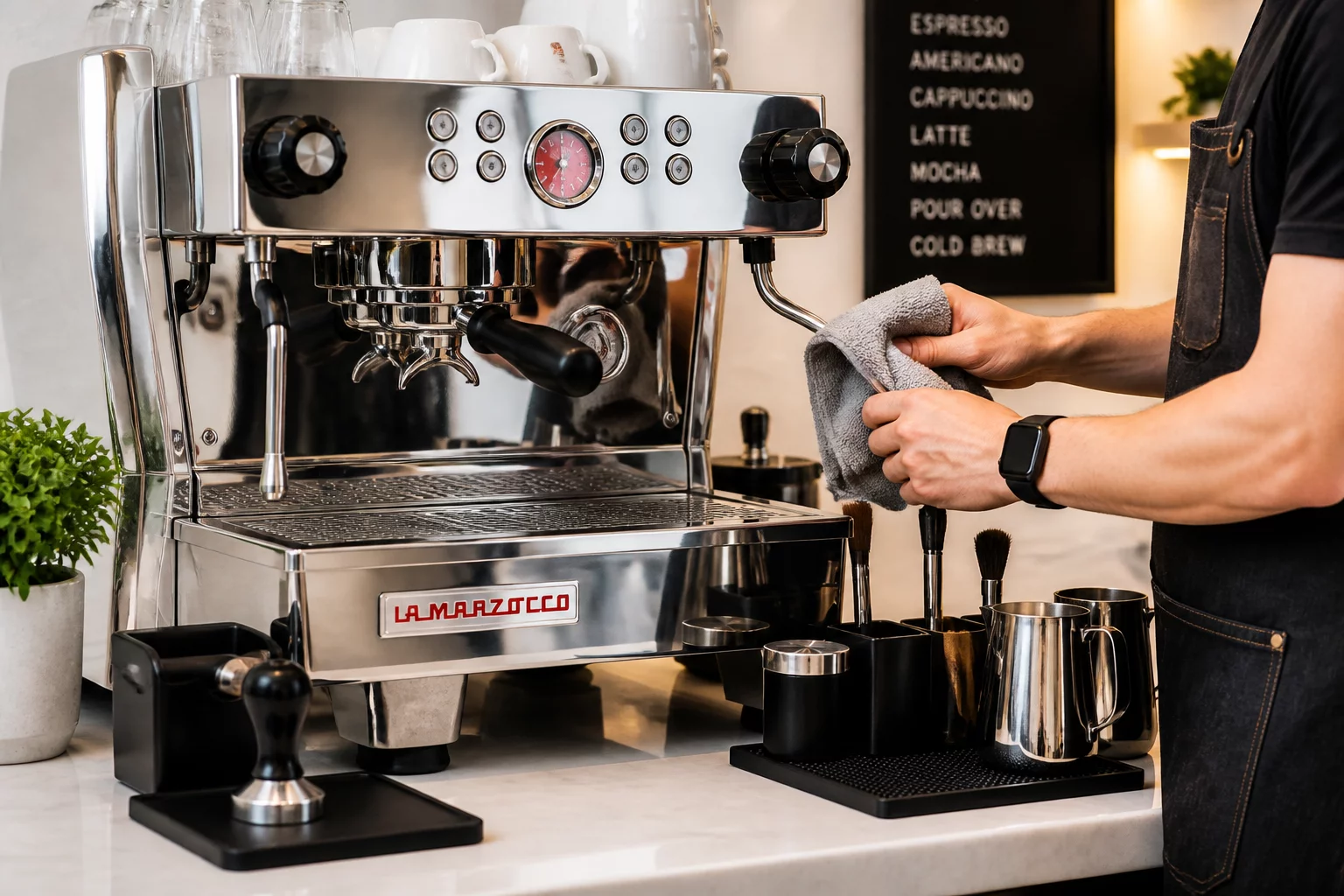
Espresso machines operate under intense heat and high pressures, which bake residual coffee fines directly into shower screens and group heads. Implement this straightforward ritual after every brew session:
- Purge and Wipe the Steam Wand: Purge steam immediately after frothing milk to clear internal passages, then wipe the exterior with a damp dedicated microfiber cloth.
- Flush the Group Head: Run a two-second water purge without the portafilter to rinse spent grounds off the shower screen.
- Dry Portafilter Baskets: Knock out the spent coffee puck promptly, rinse the basket under hot water, and dry it thoroughly before storing.
- Empty the Drip Tray: Discard accumulated rinse water and milk droplets at the end of each day to prevent foul odors and microbial buildup.
3. Manual Burr Grinder Maintenance Without Water
Steel burrs require meticulous dry cleaning. Never submerge steel burrs or bearings in water because moisture causes microscopic corrosion, rust, and burr dulling. Follow these guidelines for grinder hygiene:
- Disassemble the adjustment ring and axle mechanism according to the manufacturer layout.
- Use a natural bristle brush to sweep away compacted fines trapped between the burr flutes.
- Blow away residual dust with a manual rubber air blower or clean compressed air canister.
- Wipe the bean hopper and grounds catch cup with a dry microfibre towel.
4. Deep Cleaning Pour-Over Gear and French Presses
Manual brew gear like ceramic V60 drippers, Chemex glass servers, and French press mesh assemblies develop faint brownish stains from coffee tannins. A weekly soak in warm water with food-grade sodium percarbonate or specialized espresso cleaner dissolves oily residues without leaving artificial fragrance marks.
For French presses, unscrew the three-part metal filter disk entirely. Coffee grinds accumulate between the wire mesh and support plates, generating foul odors if neglected during routine kitchen dishwashing.
5. Descaling Water Systems and Protecting Boilers
Mineral accumulation from tap or filtered water creates calcified scale within kettle interiors and machine thermoblocks. Scale impairs heating efficiency, restricts flow rate calibration, and can permanently damage temperature sensors.
Run an organic citric acid or specialized descaling cycle every sixty to ninety days depending on your local water hardness. Always flush the boiler with two full reservoirs of clean water before brewing your next cup.
Discussion & Insights
0To leave a comment or share your cleaning workflow, please log in to your account.
No comments yet. Be the first to start the discussion!