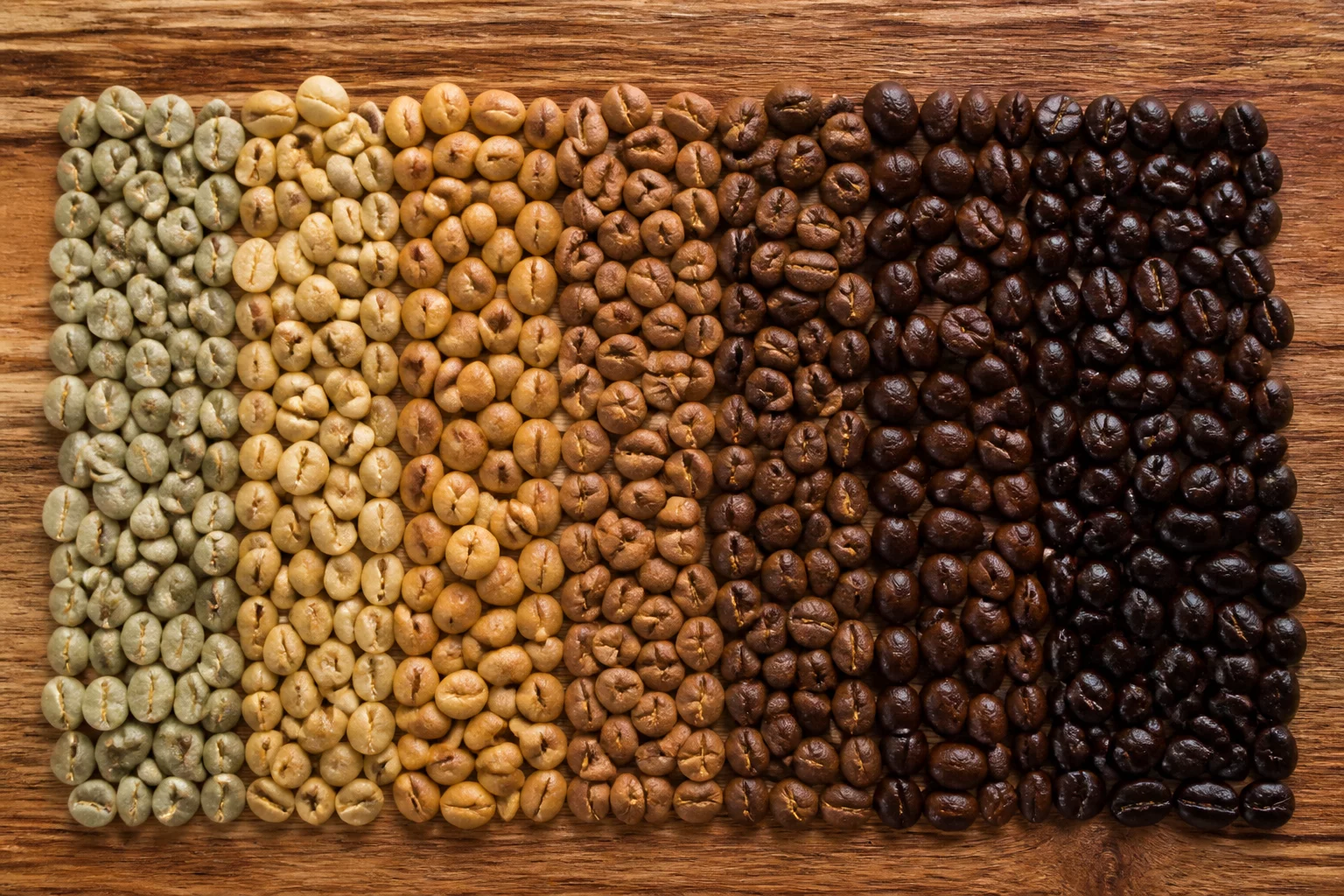
Every great cup of coffee begins its transformation inside the roasting drum. Raw green coffee seeds possess very little aroma or palatable flavor on their own. Applying controlled heat triggers thousands of chemical reactions, developing the organic acids, sugars, and aromatic compounds that define distinct roast profiles.
The Science Behind the Roast
During the roasting cycle, beans absorb heat in an endothermic phase before releasing moisture and expanding. As internal pressure builds, the bean structure cracks open. Roasters call this milestone the first crack. Stopping the process right after this stage retains the bean origin characteristics, while continuing the roast caramelizes sugars and introduces heavier pyrolytic flavors.
1. Light Roast: Origin and Terroir Focus
Light roasted beans reach temperatures around 195°C to 205°C and are pulled immediately following the first crack. The surface remains completely dry with no visible oil sheen. This gentle roast preserves the delicate floral, citric, and berry flavors native to high-altitude cultivars such as Ethiopian Yirgacheffe or Kenyan microlots.
- Flavor Profile: Crisp acidity, jasmine aroma, stone fruit sweetness, and tea-like body.
- Best Brewing Methods: Pour over drippers (V60, Chemex), AeroPress, and siphon brewers.
- Caffeine Density: Higher caffeine density per bean compared to darker roasts.
2. Medium Roast: Balance and Sweetness
Medium roasts reach between 210°C and 220°C, ending before the onset of the second crack. In this range, natural sweetness increases through balanced caramelization, while the sharper bright fruit acids soften into round chocolate and nut notes. This versatile roast serves as a crowd-pleasing option for daily consumption across diverse brewing equipment.
- Flavor Profile: Milk chocolate, roasted almond, caramel, and balanced citrus notes.
- Best Brewing Methods: Drip coffee makers, French press, and cold brew pitchers.
3. Medium-Dark Roast: Rich Body and Spice
Taken to the threshold of the second crack (around 225°C), medium-dark beans show faint traces of natural oils on their exterior. The origin notes blend evenly with roast-induced spice, molasses, and dark baker's cocoa, delivering a heavier mouthfeel and diminished acidity.
- Flavor Profile: Dark cocoa, toasted walnut, subtle smoke, and molasses.
- Best Brewing Methods: Moka pots, espresso machines, and immersion brewers.
4. Dark Roast: Bold Crema and Smokiness
Dark roasts progress through the second crack, reaching 230°C to 240°C. The intense thermal exposure forces volatile oils to the surface, creating a glossy dark exterior. Acidity is almost entirely eliminated, replaced by bittersweet dark chocolate, roasted malt, and smoky undertones that cut cleanly through steamed milk in specialty lattes and cappuccinos.
Debunking the Caffeine Myth
A widespread misconception suggests that dark roast coffee delivers substantially more caffeine due to its bold taste. The chemical structure of caffeine remains remarkably stable under typical roasting temperatures. Because beans lose water and expand during prolonged roasting, a light roast bean is denser and retains slightly more caffeine by volume. Measuring doses with a precision digital scale guarantees consistent caffeine extraction regardless of your selected roast level.
Discussion & Insights
2To leave a comment, please log in to your account.
Chris P.
Verified ReaderI never knew light roast had more caffeine.
Amanda V.
Verified ReaderVery informative article, thank you.