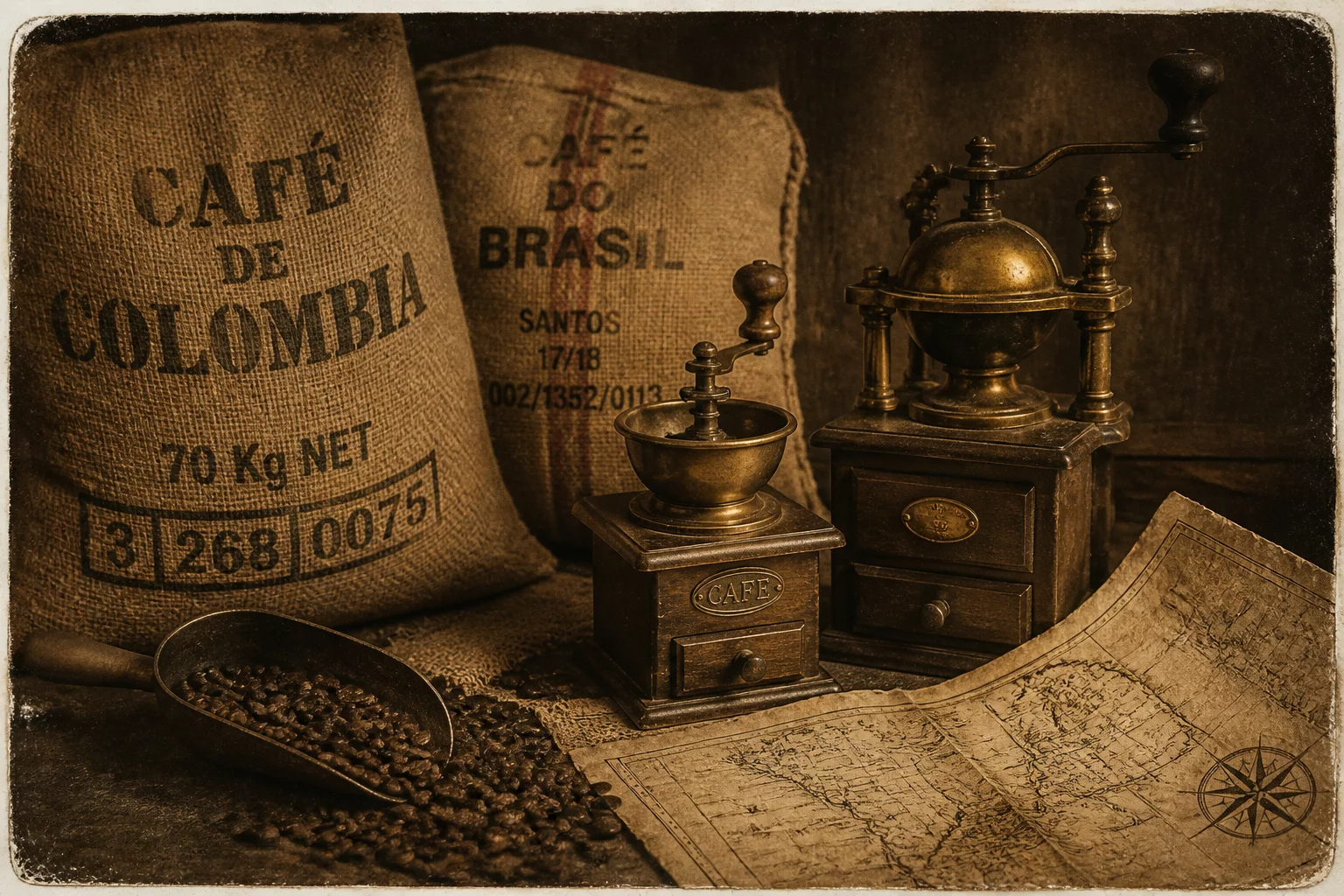
Every morning, billions of people around the world reach for a freshly brewed cup of coffee. The dark elixir provides focus, comfort, and a sensory ritual that starts the day. Yet the journey of this modest botanical seed began centuries ago in misty mountain forests, crossing continents through espionage, trade empires, and cultural revolutions.
The Ethiopian Forest and the Legend of Kaldi
The botanical birthplace of Arabica coffee resides in the southwestern highlands of Ethiopia, specifically in the ancient region of Kaffa. According to enduring folklore dating back to the 9th century, an observant goatherd named Kaldi noticed unusual vitality in his flock after the animals grazed on bright red berries from an unfamiliar shrub.
Intrigued by their tireless frolicking, Kaldi brought the mysterious cherries to an elder monk at a nearby monastery. Skeptical of their invigorating nature, the monk cast them into a fire, calling them a temptation. As the seeds began to roast, a rich, intoxicating aroma filled the stone room. The monks swiftly raked the glowing beans from the embers, crushed them, and dissolved them in hot water, creating the very first documented infusion.
"Coffee connects disparate centuries and continents: what began as monastic fuel for nocturnal contemplation became the catalyst for global commerce and intellectual exchange."
Cultivation Across the Red Sea in Yemen
By the 15th century, coffee plants had crossed the Red Sea into Yemen. In the terraced mountain orchards of the Arabian Peninsula, Sufi mystics cultivated the shrub extensively, brewing a decoction known as qahwah to maintain alertness during lengthy nighttime prayer sessions.
The bustling port of Al-Makha (Mocha) quickly grew into the epicenter of the early global coffee trade. Yemeni authorities guarded their valuable monopoly fiercely, boiling or parching the green seeds prior to export to prevent foreigners from germinating the plants elsewhere.
Ottoman Coffeehouses and European Expansion
During the 16th century, the Ottoman Empire integrated coffee into its culinary and political fabric. Lavish coffeehouses, known as qahveh-khaneh, opened across Istanbul, Cairo, and Damascus. These gathering spots transformed into vibrant centers of music, political debate, chess matches, and philosophical dialogue, earning the nickname "Schools of the Wise."
Inevitably, the trade secret slipped across borders. In the 17th century, Baba Budan, an Indian pilgrim, famously smuggled seven fertile seeds taped to his waist, planting them in the Chandragiri Hills of South India. Soon after, Dutch merchants established high-yielding plantations in Java and Sumatra, while French naval officers ferried seedlings across the Atlantic to the fertile volcanic soils of the Caribbean and Central America.
Key Eras of Global Coffee Evolution
- 9th–14th Century (Wild Discovery): Indigenous harvesting in Ethiopia and early medicinal infusions across North Africa.
- 15th–17th Century (Monastery & Port Monopoly): Organized terrace cultivation in Yemen and distribution via the port of Mocha.
- 18th–19th Century (Colonial Expansion): Rapid growth of plantation agriculture across Latin America, Southeast Asia, and Brazil.
- 20th Century (Industrial Convenience): Commercial vacuum packaging, instant soluble coffee, and classic commercial blends.
- 21st Century (Specialty & Traceability): Direct trade, single-origin terroir appreciation, precision roasting profiles, and artisanal manual brewing.
The Modern Specialty Landscape
Today, coffee is no longer viewed merely as a bitter stimulant. The contemporary specialty movement celebrates the distinct nuances of varietal genetics, soil chemistry, elevation, and washing methods. When you grind a single-origin Colombian or natural Ethiopian bean today, you participate in a continuous lineage of human curiosity and craft spanning over a thousand years.
Discussion & Insights
0To leave a comment, please log in to your account.
No comments yet. Be the first to share your thoughts on the history of coffee!